
Blaine San Luis
Blaine San Luis is a distinguished Filipino contemporary artist recognized for his contributions to Philippine Modernism and his development of a stylistic philosophy known as Neonism. Born in 1961, San Luis refined his artistic vision at the University of the Philippines, where he cultivated a practice centered on the constant evolution of the “pulso” (pulse)—the belief that an artist must continuously refine their strokes and textures to achieve a sense of living perfection.
His aesthetic is defined by a “chiseling” technique, where subjects are broken down into angular, cubist planes. While his work draws comparisons to the raw intensity of National Artist Ang Kiukok, San Luis distinguishes his style through the use of thick, layered impasto and a vibrant, harmonized palette that gives his canvases a modern, lacquer-like finish. His approach bridges the gap between traditional Filipino sentiment and contemporary geometric abstraction.
San Luis draws deep inspiration from his travels through the Philippine provinces, often incorporating the textures and silhouettes of 18th-century aparadors (cabinets) and antique altar tables into his work. His portfolio frequently explores themes of rural resilience, spiritual devotion, and the quiet dignity of Filipino life. Notable subjects include farmers at harvest, religious iconography, and the architectural nostalgia of old windows and doors.
A consistent figure in the Philippine art market, San Luis has seen his works featured prominently in prestigious auction houses such as León Gallery and Salcedo Auctions. His paintings are housed in numerous private collections and are regularly showcased at major institutions, including Art Circle Gallery. Through his commitment to “Neonism,” San Luis continues to influence the landscape of contemporary Filipino art, balancing the discipline of classic Modernism with a bold, evolving vision.
Showing 17–23 of 23 resultsSorted by latest
-

Lovers
₱225K45" x 28"
Oil on Canvas
15549
-
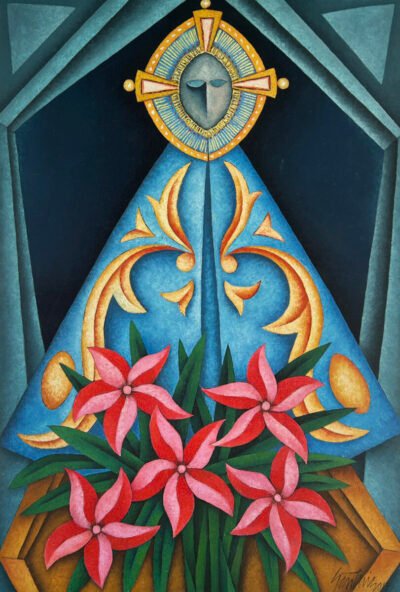
Radiant Devotion
₱175K24" X 36"
Oil on Canvas
19532
-

Magsasaka
₱380K36" X 60"
Oil on Canvas
25469
-

Seated Figure Series
₱255K48" X 30"
Oil on Canvas
23783
-
SOLD
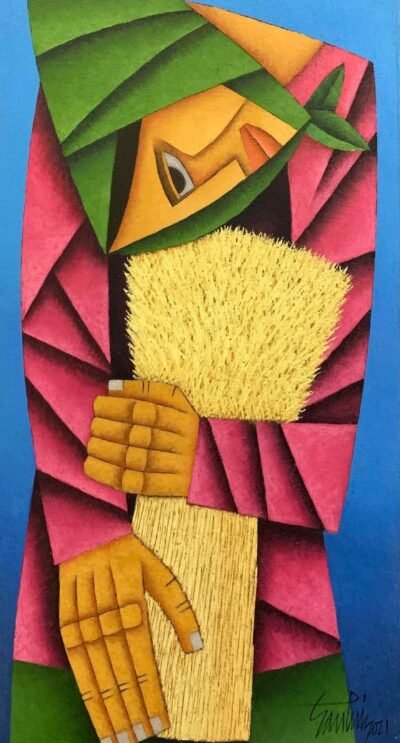
Rice Harvest
₱75K26" X 14"
Oil on Canvas
26396
-
SOLD
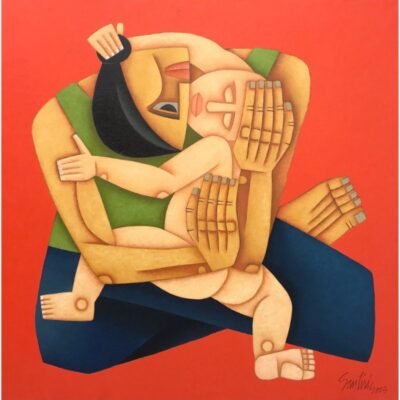
Mother and Child
₱160K30" X 30"
Oil on Canvas
27198
-
SOLD
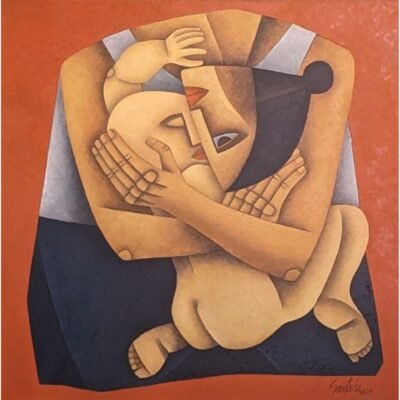
Grant Your Will
₱160K30" X 30"
Oil on Canvas
27335