
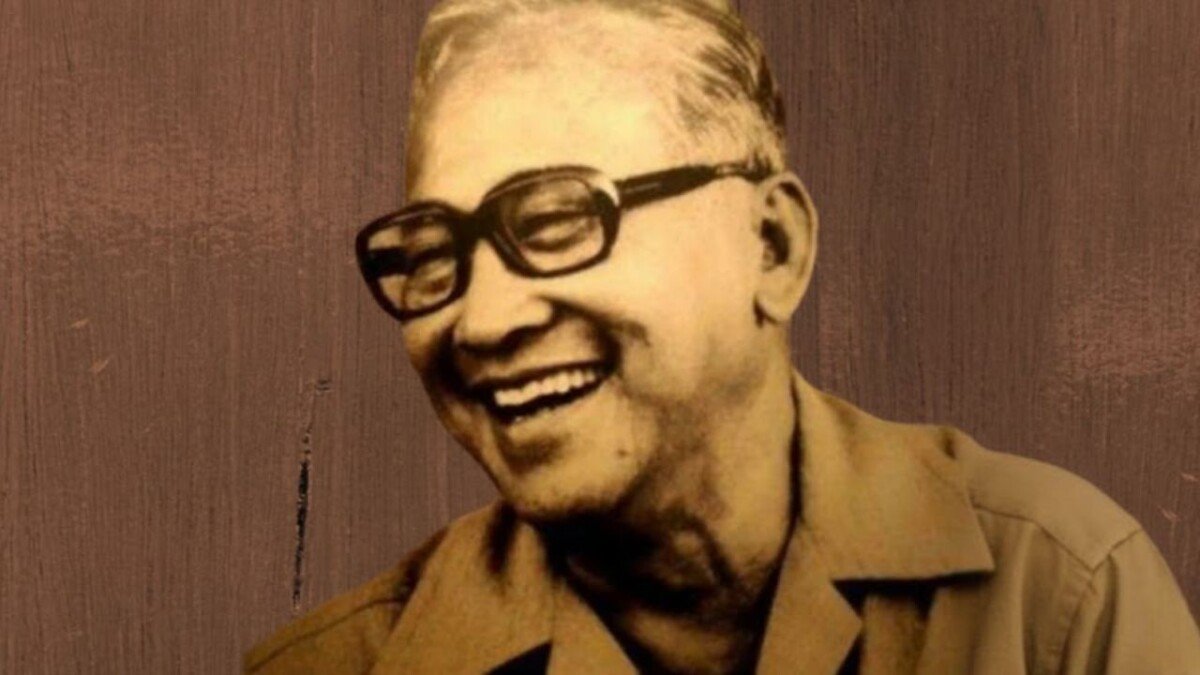
Vicente Manansala remains one of the most influential figures in Philippine modern art, not simply for introducing new visual language, but for redefining how Filipinos see themselves in a rapidly changing world. Through his signature transparent cubism, Manansala captured everyday life with clarity, warmth, and quiet dignity—bridging tradition and modernity in a way that felt both progressive and deeply Filipino.
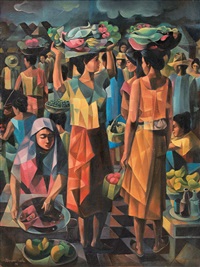
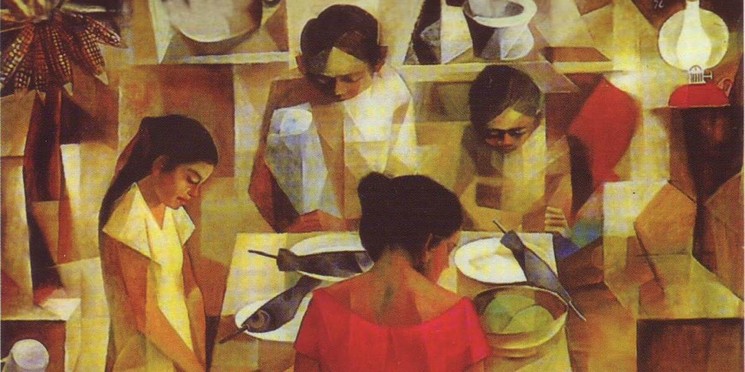
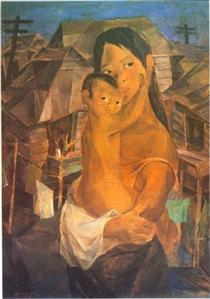
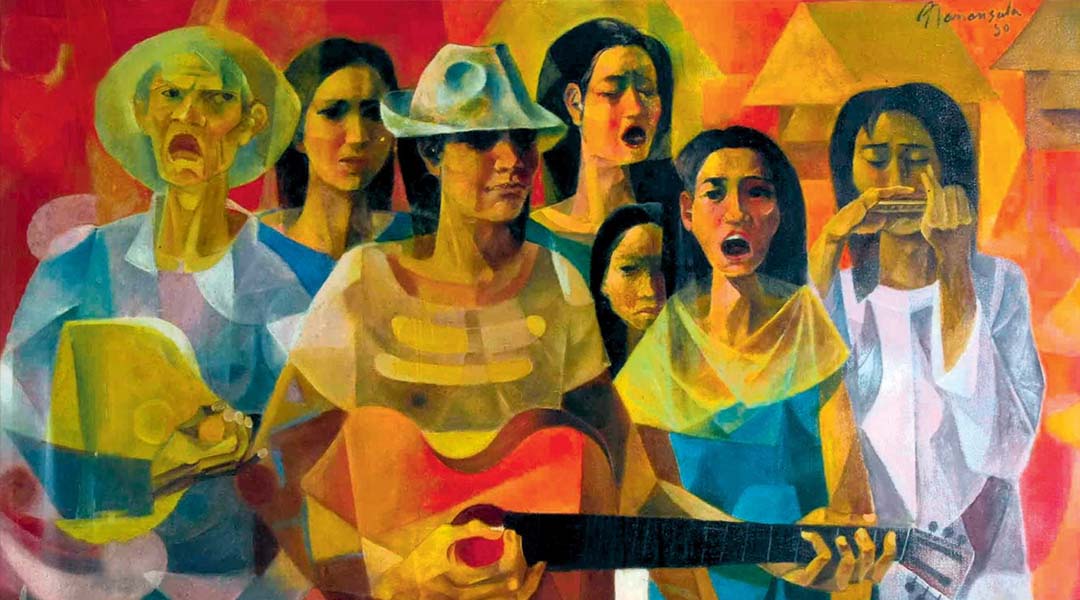
At the heart of Manansala’s work is the ordinary Filipino experience. Market vendors, families at rest, jeepneys, churches, and humble neighborhood scenes became powerful subjects under his brush. Rather than romanticizing or dramatizing these moments, he distilled them into layered forms and softened geometry, allowing viewers to see life as it is—fragmented, interconnected, and constantly in motion.
Manansala’s use of transparent cubism set him apart from his contemporaries. Inspired by Western cubist principles yet transformed through a Filipino sensibility, his paintings reveal overlapping planes and muted colors that suggest depth without harshness. Figures and environments seem to merge, reflecting the collective spirit of Filipino communities where individuality and shared experience coexist.
What makes Manansala’s work enduring is its emotional accessibility. His paintings do not demand intellectual decoding; instead, they invite contemplation. The familiarity of his subjects allows viewers to connect instinctively, while his modern approach encourages them to see the familiar from a new perspective. In his hands, modern art became less about rebellion and more about reflection—an honest response to postwar Filipino life.
Manansala also played a crucial role in legitimizing modernism in the Philippines. At a time when traditional realism dominated, he demonstrated that modern art could still be rooted in local culture, values, and narratives. His success helped pave the way for future generations of Filipino artists to experiment freely while staying grounded in their identity.
Today, Vicente Manansala’s legacy lives on not only in museums and collections but in the continuing evolution of Filipino visual culture. His work reminds us that modernity does not erase tradition—it reshapes it. Through his art, everyday Filipino life was elevated, preserved, and reimagined for generations to come.

Short Bio
Vicente Silva Manansala (1910–1981) was a National Artist for Painting and a pioneer of modern art in the Philippines. Best known for his transparent cubism, Manansala combined Western modernist techniques with Filipino subjects drawn from everyday life. He studied at the University of the Philippines and later in Paris, where his exposure to cubism influenced his artistic direction. His contributions played a vital role in shaping Philippine modernism, earning him widespread recognition both locally and internationally.