

Pablo Picasso stands as one of the most fearless innovators in the history of art. His career was not defined by a single style or movement, but by a relentless willingness to question tradition, dismantle conventions, and rebuild visual language from the ground up. For Picasso, art was never about comfort—it was about courage: the courage to experiment, to fail, and to see the world anew.
From an early age, Picasso demonstrated extraordinary technical skill, mastering classical drawing and painting with ease. Yet rather than remaining within the safety of academic realism, he chose a far more difficult path. He understood that true artistic growth required abandoning certainty. This decision—to unlearn what he already knew—became the foundation of his revolutionary impact on modern art.
Breaking Form, Rebuilding Vision
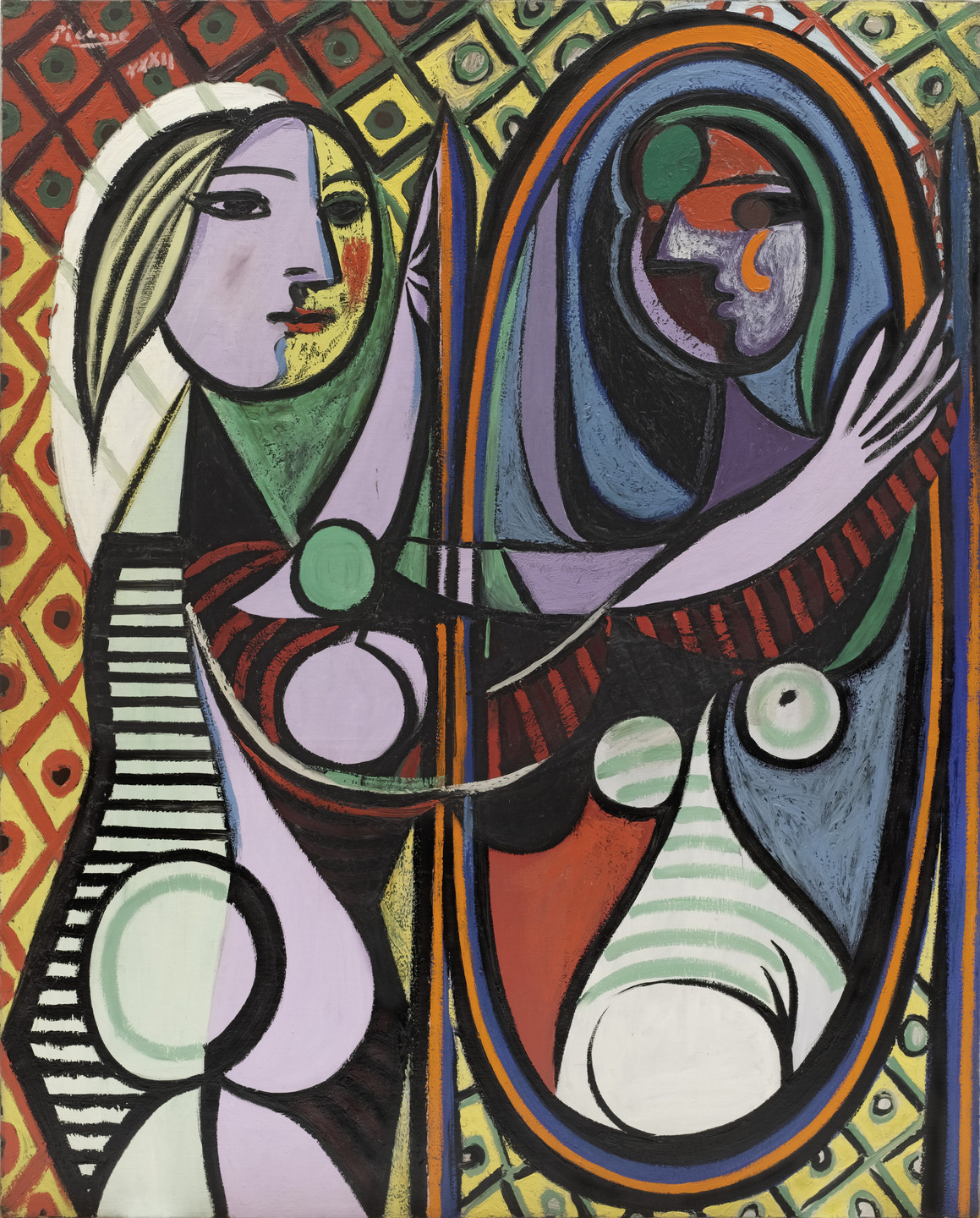
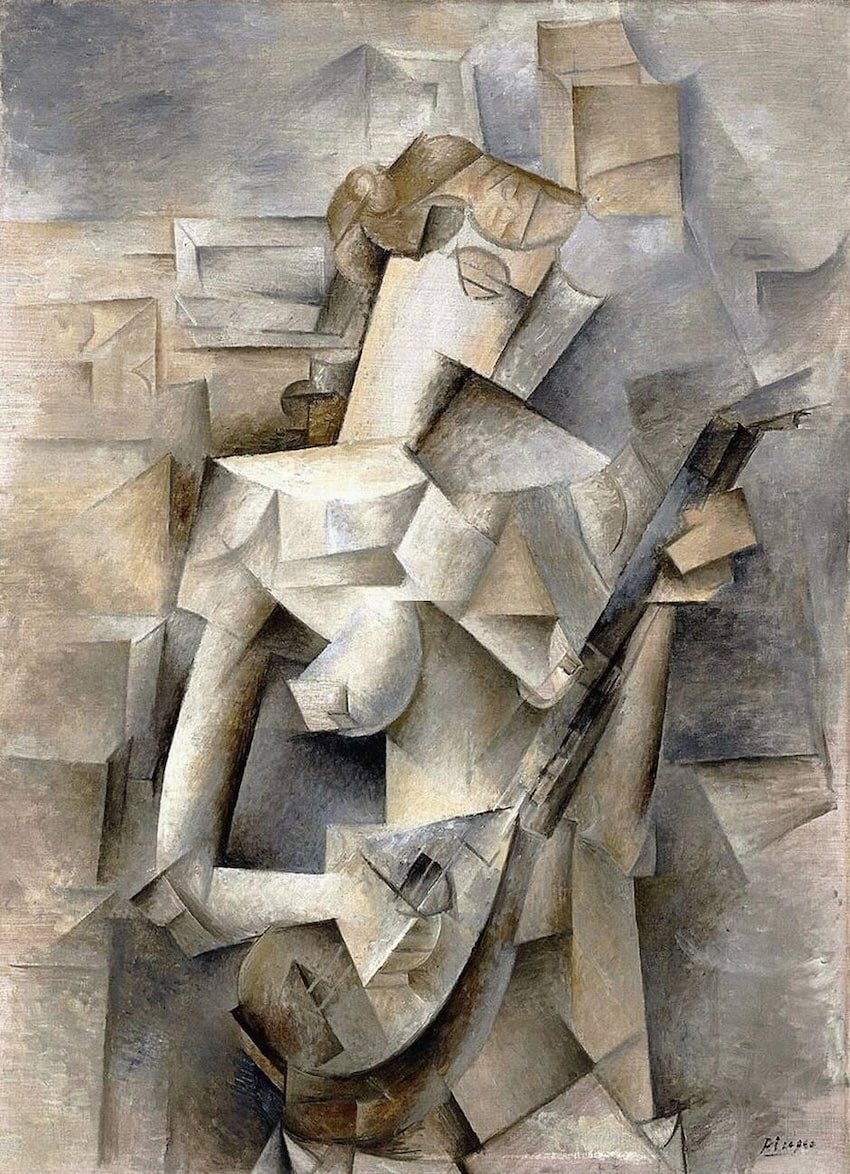
Picasso’s most radical contribution was his reimagining of form and perspective. Alongside Georges Braque, he pioneered Cubism, a movement that shattered the illusion of depth and single-point perspective that had dominated Western art for centuries. Objects were broken into geometric planes, shown from multiple viewpoints simultaneously, and reassembled on the canvas. This was not distortion for its own sake—it was a deeper attempt to depict reality as it is experienced, not merely as it appears.
Cubism challenged viewers to actively engage with art. It demanded attention, thought, and openness. In doing so, Picasso transformed the role of the audience, turning art into a dialogue rather than a passive observation. His courage to defy visual expectations opened doors for abstraction, conceptual art, and countless modern movements that followed.
Emotion, Politics, and the Human Condition
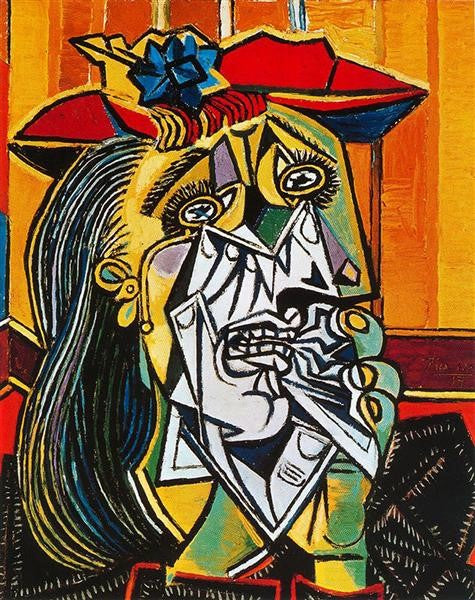
Beyond formal innovation, Picasso used art as a powerful emotional and political tool. His works often reflected the turbulence of his time—war, suffering, displacement, and the fragility of human life. Nowhere is this more evident than in Guernica, a monumental painting that responds to the horrors of war with raw intensity and symbolic force. Through fractured bodies, anguished expressions, and stark contrasts, Picasso transformed personal outrage into a universal anti-war statement.
At the same time, Picasso’s art was deeply personal. His relationships, fears, desires, and contradictions were laid bare across decades of work. Rather than hiding behind aesthetic perfection, he embraced emotional honesty. This vulnerability gave his art an enduring relevance, reminding us that reinvention is not only technical, but deeply human.
A Legacy of Fearless Creation
What makes Picasso truly extraordinary is not just the volume or variety of his work, but his refusal to stand still. Each period of his career was marked by transformation—Blue Period, Rose Period, Cubism, neoclassicism, surrealist explorations—each one a deliberate departure from the last. Picasso treated art as a living process, constantly evolving alongside his own understanding of the world.
His legacy is a challenge to artists and audiences alike: to remain curious, to question inherited norms, and to approach creation with bravery. Picasso showed that art does not progress through imitation, but through bold reinvention. In choosing courage over comfort, he forever changed how we see, create, and understand art.
Highlights
- Full Name & Lifespan: Pablo Picasso (1881–1973)
- Nationality & Base of Work: Spanish, spent most of his adult life in France
- Primary Mediums: Painting, sculpture, printmaking, ceramics, stage design
- Key Art Movements / Styles: Blue Period, Rose Period, Cubism, Neoclassicism, Surrealism
- Most Iconic Works: Guernica, Les Demoiselles d’Avignon, The Weeping Woman
- Major Achievements / Recognition: Co-founder of Cubism, major influence on 20th-century art, works exhibited worldwide
- Themes / Significance: Emotion, social commentary, reinvention of form, courage in experimentation
- Fun Fact / Trivia: Could draw before he could walk; produced over 50,000 artworks
Short Bio
Pablo Picasso (1881–1973) was a Spanish painter, sculptor, and one of the most influential artists of the 20th century. Born in Málaga, Spain, he spent much of his adult life in France, where he produced an extensive body of work across multiple styles and mediums. Co-founder of the Cubist movement, Picasso’s innovations reshaped modern art and continue to influence artists worldwide. His works remain among the most recognized, studied, and celebrated in art history.