

Hernando R. Ocampo stands as one of the most influential figures in Philippine modern art, celebrated for redefining the visual language of abstraction through intense color, rhythmic forms, and emotional depth. At a time when Philippine art was largely grounded in realism and pastoral themes, Ocampo pushed boundaries—introducing a bold, non-representational approach that mirrored the complexity, tension, and vitality of the modern Filipino experience.
Born in 1911, Ocampo initially worked as a writer and illustrator, contributing short stories and visual works to magazines and publications. This literary background deeply informed his painting practice. His early works reflected social realities and human struggle, but by the late 1940s and 1950s, his artistic direction shifted decisively toward abstraction. Rather than depicting recognizable subjects, Ocampo explored color relationships, organic forms, and emotional resonance, believing that art should evoke feeling rather than imitate nature.
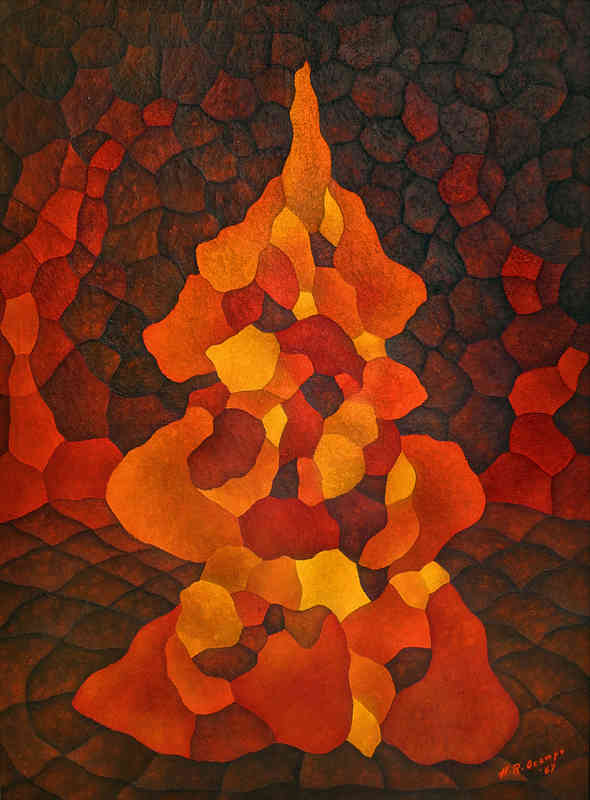
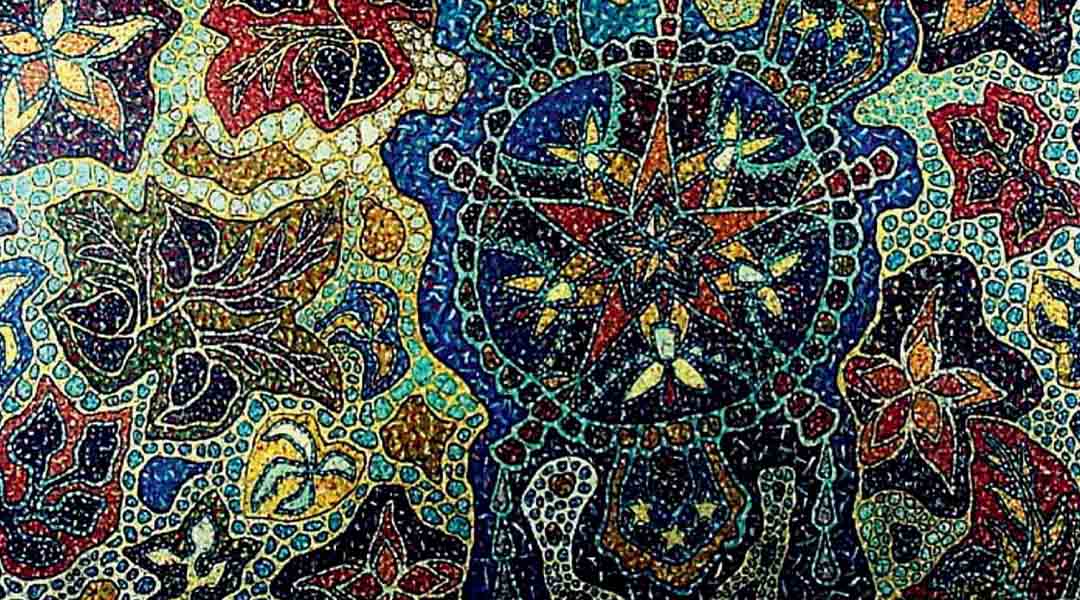
Ocampo became a key member of the Thirteen Moderns, a pioneering group of Filipino artists—including Vicente Manansala and Cesar Legaspi—who challenged conservative academic traditions. His style evolved into what is often described as biomorphic abstraction, characterized by floating shapes, cellular forms, and bold color contrasts. These compositions feel alive, pulsating with energy, and reflective of both inner emotion and the natural world, without directly portraying it.
Among his most iconic works is Genesis (1969), the monumental mural that serves as the main curtain of the Cultural Center of the Philippines’ Main Theater. The piece exemplifies Ocampo’s mastery of color and movement, symbolizing creation, life force, and perpetual transformation. Other notable works such as Fiesta, Calvary, and Slum Dwellers demonstrate his range—from early social consciousness to mature abstraction.
Hernando R. Ocampo’s impact extends beyond his canvases. He helped legitimize abstraction in Philippine art, paving the way for later generations of modern and contemporary artists to experiment freely with form and expression. His work remains powerful and relevant, reminding viewers that art can communicate emotion and meaning without literal representation.
Highlights
Full Name & Lifespan
Hernando Ruiz Ocampo (1911–1978)
Nationality & Base of Work
Filipino; primarily worked in the Philippines
Primary Mediums
Oil on canvas, mural painting, illustration
Key Art Movements / Styles
Philippine Modernism, Abstract Art, Biomorphic Abstraction
Most Iconic Works
Genesis, Fiesta, Calvary, Slum Dwellers
Major Achievements / Recognition
National Artist of the Philippines for Visual Arts (1991, posthumous); Member of the Thirteen Moderns; CCP main theater curtain artist
Themes / Significance
Emotion through color, organic energy, abstraction as expression, break from representational art
Fun Fact / Trivia
Before fully dedicating himself to painting, Ocampo was an accomplished writer and fictionist, which influenced the narrative depth of his visual works.



Short Bio
Hernando R. Ocampo was a Filipino National Artist who revolutionized Philippine art through abstraction and fearless use of color. As a leading modernist and member of the Thirteen Moderns, he challenged traditional realism and introduced emotionally charged, non-representational forms that reshaped the country’s artistic landscape. His legacy endures as a cornerstone of Philippine modern art, inspiring generations to explore emotion, movement, and meaning beyond the visible world.