

Few artists have translated the depths of human emotion into visual form as powerfully as Edvard Munch. Through his art, Munch sought not to replicate reality, but to expose the psychological forces that shape love, fear, loneliness, and despair. His work marked a decisive shift in modern art, moving away from external appearances toward the raw inner life of the individual.
Munch was born in Norway into a family deeply affected by illness, loss, and emotional instability. The early deaths of his mother and sister from tuberculosis, combined with his father’s severe religious outlook and mental fragility, profoundly shaped his worldview. These experiences instilled in Munch a lifelong conviction that art should confront suffering head-on. For him, painting became a means of survival—an act of emotional confession and self-exploration.
After formal training at the Royal School of Art and Design in Kristiania (now Oslo), Munch traveled across Europe, immersing himself in the artistic circles of Paris and Berlin. He absorbed influences from Symbolism and Post-Impressionism, yet resisted strict categorization. Instead, he developed a highly personal visual language defined by expressive color, distorted forms, and flowing, rhythmic lines. Technical refinement was secondary to emotional truth, and his compositions often feel deliberately unsettled, mirroring the psychological tension within them.
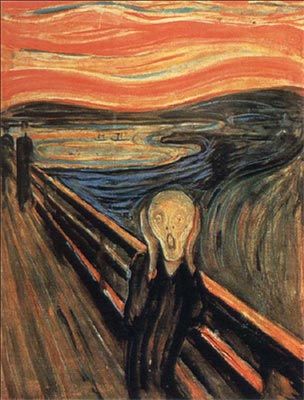
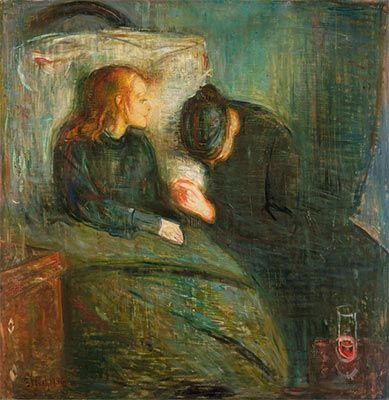
This approach reached its fullest expression in The Frieze of Life, a thematic cycle addressing love, desire, jealousy, anxiety, and death. Within this body of work emerged images that would become enduring symbols of modern anxiety, most notably The Scream. Rather than depicting a specific moment or narrative, Munch’s figures embody emotional states, transforming private anguish into universal experience. Works such as The Sick Child, Madonna, and The Dance of Life further reveal his fascination with vulnerability, intimacy, and the inevitability of loss.
Munch’s uncompromising vision was met with resistance during his early career. In Germany, one of his exhibitions was famously closed due to public outrage over the disturbing nature of his work. Yet this same intensity resonated strongly with younger artists, particularly those who would form the German Expressionist movement. Munch’s emphasis on emotion over realism helped redefine the purpose of art in the modern age.
Despite ongoing struggles with mental health and alcoholism, Munch continued to produce work well into later life, expanding into printmaking and large-scale murals. Eventually embraced as a national figure in Norway, he left behind a vast body of work that continues to influence contemporary art. More than a chronicler of personal suffering, Edvard Munch gave visual form to the psychological condition of modern humanity—its fears, desires, and fragile sense of self.
Highlights
• Full Name & Lifespan: Edvard Munch (1863–1944)
• Nationality & Base of Work: Norwegian; primarily worked in Norway, Germany, and France
• Primary Mediums: Painting, printmaking (lithography, woodcut, etching), drawing
• Key Art Movements / Styles: Symbolism, Expressionism, Modern Art
• Most Iconic Works: The Scream, Madonna, The Sick Child, The Dance of Life, Anxiety
• Major Achievements / Recognition: Pioneer of Expressionism; major influence on 20th-century modern art; extensive national commissions in Norway
• Themes / Significance: Psychological anguish, love and loss, anxiety, mortality, human vulnerability
• Fun Fact / Trivia: The Scream exists in several painted and printed versions, making it one of the most repeatedly explored images by a single artist

Short Bio
Edvard Munch was a Norwegian painter and printmaker whose emotionally charged works transformed personal suffering into universal visual language. Best known for The Scream, Munch pioneered a style that prioritized inner experience over outward appearance, laying the groundwork for Expressionism. His fearless exploration of anxiety, love, illness, and death reshaped modern art and secured his legacy as one of its most influential and psychologically profound figures.