
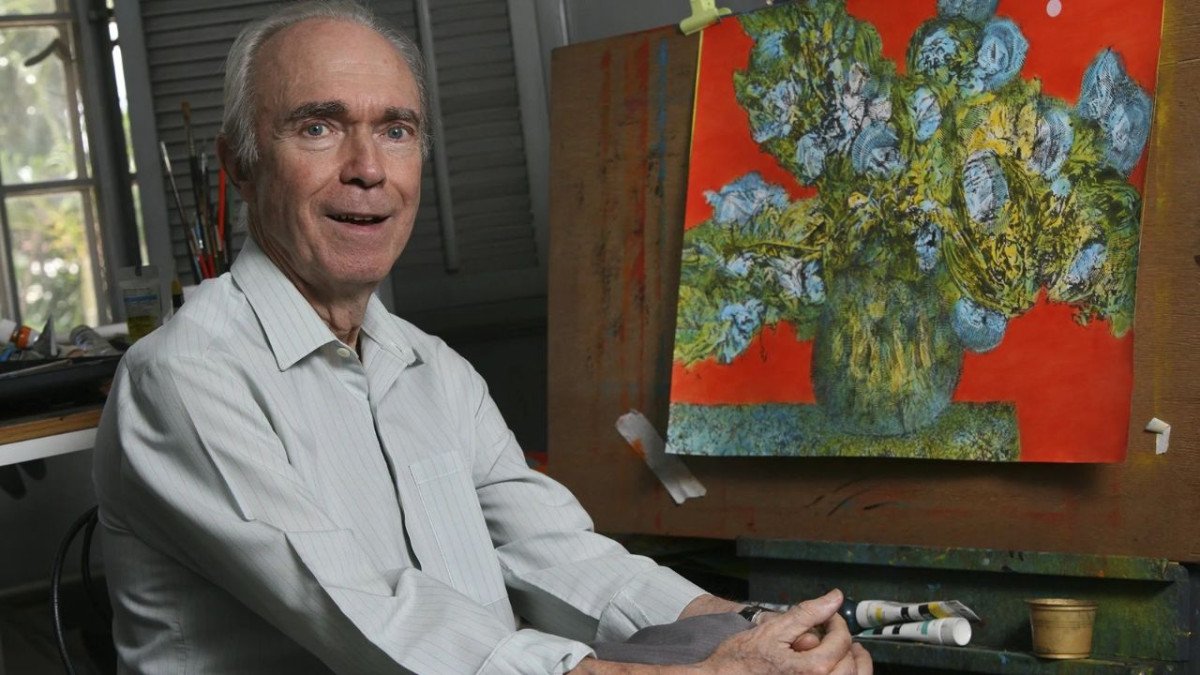
Juvenal Sansó (b. 1929) was born in Reus, Catalonia, Spain, before relocating at age five to Manila, Philippines, where his family established El Arte Español, a wrought-iron craftsmanship shop. Raised in the Paco district of Manila, his boyhood was marked by immersion in local Philippine culture alongside the artistic instincts of his father. However, the onset of World War II shattered this idyllic early period; the young artist endured extreme physical trauma—including artillery blast injuries that left him permanently deaf in one ear—and witnessed the devastating destruction of his adopted homeland. Seeking formal artistic training after the war, Sansó initially took lessons under Alejandro Celis before enrolling at the University of the Philippines School of Fine Arts. There, he studied under classical titans such as Fernando Amorsolo, Dominador Castañeda, and Ireneo Miranda, before furthering his education in Europe at the Accademia di Belle Arti in Rome and the École Nationale Supérieure des Beaux-Arts in Paris.
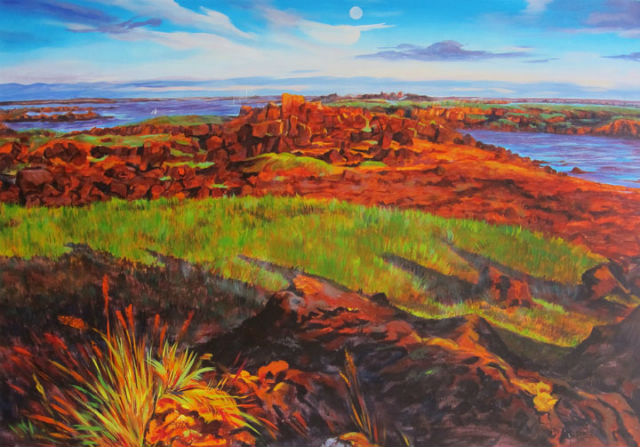
Sansó’s artistic signature represents a radical break from traditional academic impressionism and romantic realism. His technique emerged from a raw, cathartic response to wartime tragedy during his “Black Period,” characterized by dark, grotesquely distorted figures, grotesque beggars, and intense monochrome line work. As he evolved beyond this psychological turmoil, Sansó pioneered a highly intricate, surrealist modernism defined by meticulous ink etchings, delicate cross-hatching, and luminous acrylic and watercolor palette applications. His visual composition abandoned classic landscape proportions in favor of dreamlike, meditative vistas: jagged rock formations, skeletal flora, tranquil seascapes, and bamboo fish traps (baklad) suspended in ethereal, timeless atmospheres. By synthesizing European technique with tropical Philippine topography, he forged an unmistakable visual language that eschewed conventional perspective for emotional and spiritual resonance.
Throughout his distinguished career, Sansó produced a vast body of celebrated masterpieces and versatile creative contributions. His breakthrough moments came in the early 1950s when his watercolor painting Incubus (1950) and his oil painting Sorcerer (1951) captured back-to-back first prizes at the Art Association of the Philippines (AAP) competitions. Beyond easel painting and printmaking, Sansó achieved notable acclaim in the secondary medium of opera and theater set design, creating monumental scenography and costume designs for productions such as Sergei Prokofiev’s The Gambler in Toulouse, France, and Gian Carlo Menotti’s The Most Important Man. His master etchings gained international prestige, leading to commissions alongside modernist masters like Henri Matisse, Mark Tobey, and Salvador Dalí for the Print Club of Rochester.
Sansó’s lasting imprint on global art history lies in his unique capacity to bridge Eastern and Western sensibilities into a cohesive, highly individualist modernism. His contributions have earned him top honors across the three nations he called home: the Presidential Medal of Merit from the Republic of the Philippines (2006), the Distinguished King’s Cross of Isabella the Catholic from Spain (2007), and the Chevalier de l’Ordre des Arts et des Lettres from France (2008). Today, his works reside in the permanent collections of major global institutions, including the Musée d’Art Moderne and Bibliothèque Nationale in Paris, the Museo de Arte Contemporáneo in Madrid, the Smithsonian Institution and Library of Congress in Washington, D.C., the Museum of Modern Art (MoMA) and Metropolitan Museum of Art in New York, and the National Museum of the Philippines.
Highlights
- Full Name & Lifespan: Juvenal Sansó Garrit (1929–2025)
- Nationality & Base of Work: Spanish-Filipino; Paris, Manila, and Reus
- Primary Mediums: Acrylic, Oil, Watercolor, Etching/Printmaking, and Ink
- Key Art Movements / Styles: Modernism, Expressionism, Surrealism, Fine Printmaking
- Most Iconic Works: Incubus (1950), Sorcerer (1951), Corriendo a Solas (circa 1970), In the Glowing Twilight (1972)
- Major Achievements / Recognition: Philippine Presidential Medal of Merit (2006); Spanish Cross of Isabela (2007); French Chevalier de l’Ordre des Arts et des Lettres (2008)
- Themes / Significance: Post-war psychological trauma, surreal landscapes, baklad (fish traps), flora, and serene atmospheric light
- Fun Fact / Trivia: In his youth following the liberation of Manila, Sansó served as a bus conductor on a homemade bus built by his father using repurposed automobile tires.


Short Bio
Juvenal Sansó is a world-renowned painter, printmaker, and set designer whose career spans over seven decades across Asia and Europe. Emerging from the trauma of World War II, Sansó transformed early anguish into a serene, highly technical artistic style marked by intricate line work and poetic, surreal vistas. Recognized with top civilian and cultural honors by the Philippines, France, and Spain, he remains an enduring icon of international modernism whose works grace the permanent collections of the world’s most prestigious museums.