
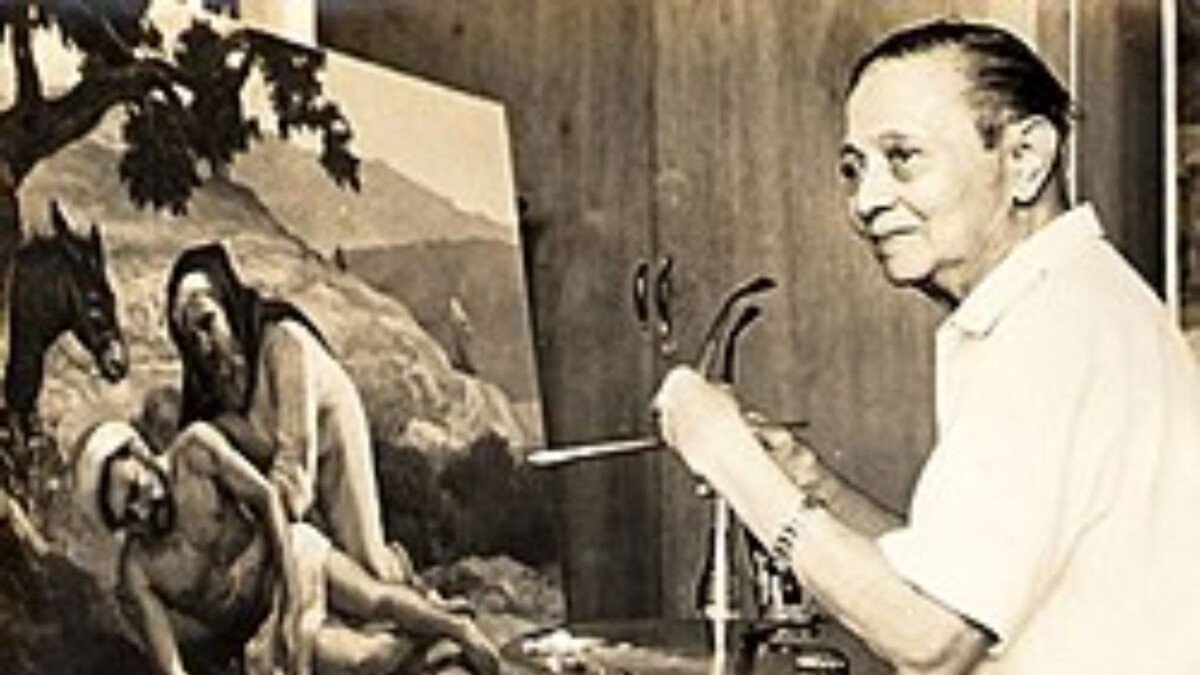
Fernando Amorsolo y Cueto (1892–1972) stands as one of the most celebrated Filipino painters, often hailed as the “Grand Old Man of Philippine Art.” Renowned for his masterful treatment of light, Amorsolo captured the warmth, vibrancy, and idyllic beauty of rural Philippines in a way that became iconic for generations. Born in Paco, Manila, he showed a natural talent for art at an early age and pursued formal training at the School of Fine Arts of the University of the Philippines, where he honed his skills in painting and drawing.
Amorsolo’s work is deeply rooted in realism, yet it is suffused with a lyrical quality that elevates everyday rural scenes into timeless images of national pride and nostalgia. He had a remarkable ability to portray the subtleties of sunlight, often painting scenes in the “golden hour,” capturing the warm glow that defined Philippine landscapes. His subjects frequently included Filipino farmers, women in traditional attire, fiestas, and the serene countryside, offering both historical documentation and an idealized vision of Filipino life.
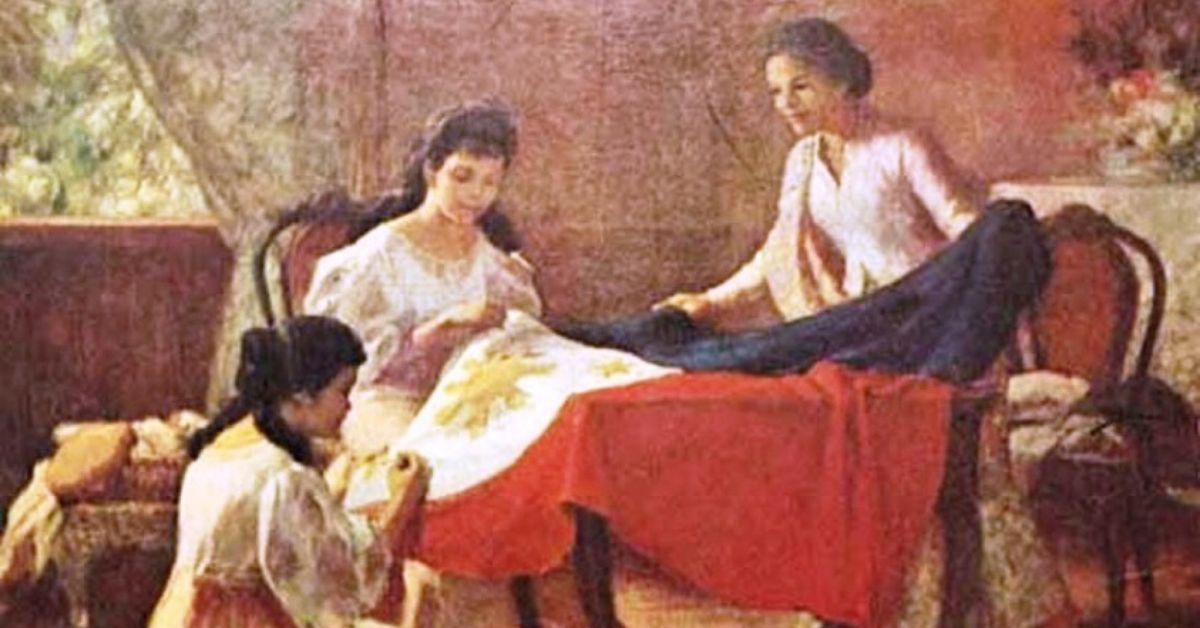
Over his prolific career, Amorsolo produced hundreds of paintings, many of which have become cultural touchstones. Iconic works such as Planting Rice, Dalagang Bukid, and The Making of the Philippine Flag highlight his mastery of light, composition, and narrative storytelling. He also contributed significantly to portraiture, capturing the likeness and character of prominent figures in Philippine society.
Beyond his artistic skill, Amorsolo played a pivotal role in shaping Philippine visual identity. He was the first National Artist of the Philippines for Painting in 1972, a testament to his influence and legacy. His paintings continue to be cherished in private collections, museums, and public institutions, reflecting both the historical and aesthetic richness of the Philippines.
Amorsolo’s style, often classified under Philippine Realism, combines meticulous detail with an evocative treatment of light and atmosphere. This focus on illumination not only brought vibrancy to his works but also became a hallmark that influenced subsequent generations of Filipino artists.
Highlights
- Full Name & Lifespan: Fernando Amorsolo y Cueto (1892–1972)
- Nationality & Base of Work: Filipino; based primarily in Manila and rural Philippines
- Primary Mediums: Oil on canvas, watercolor, portraiture
- Key Art Movements / Styles: Realism, Lyrical Realism, Philippine Modernism
- Most Iconic Works: Planting Rice, Dalagang Bukid, The Making of the Philippine Flag, Barrio Fiesta
- Major Achievements / Recognition: First National Artist of the Philippines for Painting (1972); numerous awards in national and international exhibitions
- Themes / Significance: Celebration of Filipino rural life, national identity, light and atmosphere, cultural memory
- Fun Fact / Trivia: Amorsolo’s signature depiction of sunlight earned him the nickname “Painter of Light,” making his works instantly recognizable.


Short Bio
Fernando Amorsolo (1892–1972) was a Filipino painter whose luminous depictions of rural life and mastery of light immortalized the beauty of the Philippines. Through his realist yet idealized portrayals of everyday life, fiestas, and landscapes, he established a visual language of Filipino identity. As the country’s first National Artist for Painting, Amorsolo left a lasting legacy, influencing generations of artists while capturing the nation’s memory, culture, and enduring spirit.